

TL;DR:
- Patterns in Japanese architecture guide viewers through visual rhythm and perceived depth.
- Recognizing traditional and modern patterns enhances composition and cultural storytelling.
- Developing pattern awareness builds creative habits that elevate travel photography skills.
Spot patterns in Japanese architecture photography
Most photographers travel to Japan expecting to be wowed by grand temples and towering cityscapes. They focus on the big picture: the golden pavilion, the red torii gate, the neon-lit street. What they miss is the quiet visual language woven into every surface, pillar, and garden stone. Patterns are that language, and learning to read them changes everything. This guide will show you how to recognize architectural patterns across Japan, understand why they matter compositionally, and use them deliberately to produce images that truly stand apart from the tourist snapshot.
Table of Contents
- Why patterns transform architecture images
- Types of patterns in Japanese architecture: From tradition to modern
- How to spot and compose patterns on location
- Patterns in storytelling: Bringing emotion and depth to your shots
- What most guides miss about patterns in Japanese architecture images
- Ready to elevate your skills? Join a Japan photo tour
- Frequently asked questions
Key Takeaways
| Point | Details |
|---|---|
| Patterns boost impact | Architectural patterns grab attention and add structure to your travel photos. |
| Japanese motifs | Both traditional and modern Japanese buildings feature unique, photo-friendly patterns. |
| On-location spotting | Look for repeating elements and compose with care to make your shots stand out. |
| Storytelling with patterns | Use patterns to express emotion and deepen the narrative in your images. |
Why patterns transform architecture images
Patterns do something that a single dramatic subject cannot: they guide your viewer’s eye on a journey. When a row of wooden pillars repeats into the distance, your eye follows. When a lattice screen divides light into identical diamonds, your brain finds order and pleasure. That response is instinctive, and skilled photographers use it on purpose.
At the most basic level, patterns create visual rhythm. Rhythm in a photograph works much the way it does in music. A repeating beat gives listeners a feeling of forward motion, and a break in that beat creates drama. In architecture photography, a long corridor of evenly spaced stone lanterns builds rhythm. A single fallen lantern, slightly off-kilter, breaks it. That break is where story lives.
Patterns also add perceived depth. A flat facade with no repetition looks two-dimensional. The same wall photographed so that a repeating grid of windows recedes toward a vanishing point suddenly looks three-dimensional, pulling the viewer into the frame. This technique is especially powerful in Japan, where geometry in Japanese architecture ranges from the modular precision of tatami rooms to the dramatic concrete repetition of Tadao Ando’s minimalist museums.
Beyond composition, patterns carry cultural meaning. Traditional Japanese construction used post-and-beam frameworks because wood was abundant and earthquake-resistant joinery demanded repetition. The result is that rhythm is literally built into the structure of heritage buildings. Symmetry in Japanese structures is not accidental decoration; it reflects centuries of craft philosophy. When you photograph that symmetry deliberately, you are also telling a cultural story.
“Patterns abound in Japanese architecture, from Tadao Ando’s concrete geometries and Kengo Kuma’s wood textures to traditional tatami proportions and post-beam repeats. Recognizing them enhances skills in symmetry and light play that are crucial for travel photography.”
Here is what patterns specifically offer you as an amateur photographer in Japan:
- Instant composition structure. A repeating element gives you a ready-made grid to align your shot.
- Scalable storytelling. Tight close-ups of a single tile pattern and wide shots of a pagoda’s repeating tiers both work because the principle is the same.
- Light interaction. Lattices, screens, and pillar shadows turn ordinary midday light into something dramatic.
- Cultural context. Each pattern type carries history you can research and share alongside your image.
Pro Tip: Before raising your camera at any Japanese building, spend sixty seconds walking along its facade. Look for what repeats. That repetition is your compositional anchor for the entire shoot.
Types of patterns in Japanese architecture: From tradition to modern
Japan offers two broad pattern vocabularies and they are dramatically different from each other. Understanding both will let you shoot confidently at a 1,200-year-old shrine in Kyoto and a glass-and-steel tower in Tokyo, finding the visual language that connects them.
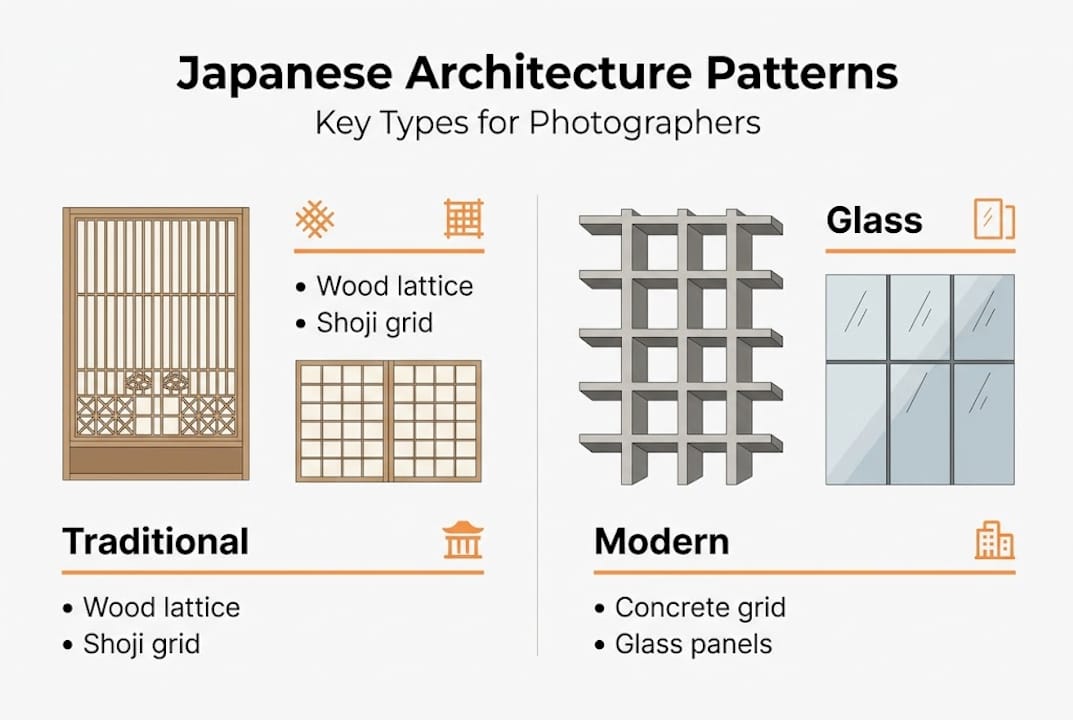
Traditional patterns emerge from materials and constraints. Wood was the primary building material, and joinery techniques required regular, modular spacing. Tatami mats imposed a proportional grid on every interior space. Post-and-beam construction created exterior rhythms of upright columns. Curved eaves repeated tier after tier on pagodas. Stone lanterns lined pathways in evenly spaced processions. Torii gates, stacked in long tunnels at shrines like Fushimi Inari in Kyoto, create one of the most visually overwhelming pattern experiences available to a photographer anywhere on Earth.
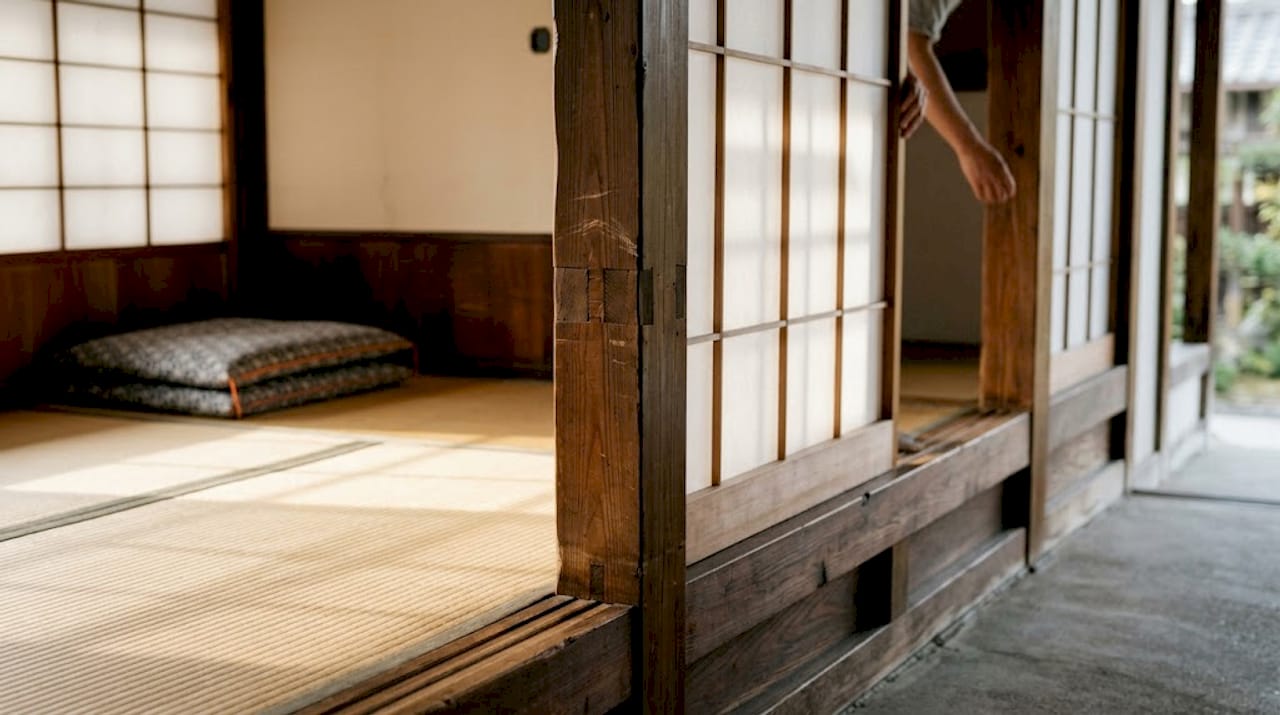
Modern Japanese architecture uses patterns just as deliberately, though with very different materials. Tadao Ando’s concrete walls rely on the regular grid of formwork bolt holes to create texture. Kengo Kuma layers thin wood slats at consistent angles to produce surface depth that changes with the viewing angle. Glass curtain walls in Osaka and Tokyo create massive grids of reflected sky. Each of these is a pattern, and each rewards a thoughtful composition.
| Pattern type | Example location | Mood it creates | Best composition approach |
|---|---|---|---|
| Post-and-beam columns | Todai-ji, Nara | Ancient, grounded | Low angle, vertical frame |
| Torii gate tunnels | Fushimi Inari, Kyoto | Overwhelming, spiritual | Center axis, long exposure |
| Pagoda tier curves | Horyu-ji, Nara | Graceful, layered | Side angle to show depth |
| Concrete bolt grids | Ando buildings, Osaka | Minimalist, calm | Close-up, flat light |
| Glass curtain grids | Tokyo skyscrapers | Dynamic, modern | Wide angle, sky reflection |
When photographing temple patterns, notice how traditional proportions align with what Western art theory calls the golden ratio. Temple gate widths often relate to height in proportions that feel naturally balanced. You do not need to measure anything; your eye will tell you when a composition feels right because the architecture was designed to produce that sensation.
Here is how to build your pattern awareness systematically at any location:
- Identify the dominant module. What is the smallest unit that repeats? A single pillar? One tatami mat? One concrete panel?
- Count the repetitions. More repetitions mean stronger rhythm. Choose a shooting angle that shows as many as possible.
- Find the boundary. Where does the pattern end? Shooting toward that boundary adds narrative tension.
- Look for the break. A crack, a shadow, a person walking through. The anomaly in the pattern is your focal point.
- Consider the scale. Is this pattern better as a tight abstract or a wide environmental shot? Often, both are worth taking.
For iconic Japanese architecture shots, the ability to shift between macro pattern details and grand compositional rhythms is what separates memorable images from ordinary travel photos.
How to spot and compose patterns on location
Knowing that patterns exist and actually finding them under shooting conditions are two very different skills. Japan’s busiest sites can feel overwhelming. Here is a practical system for locating and composing patterns regardless of crowds or light conditions.
Gear selection matters more than most guides admit. A standard 35mm or 50mm lens preserves natural proportions and avoids the barrel distortion that ruins a carefully balanced composition. Telephoto lenses in the 70mm to 135mm range are excellent for compressing repeating elements: a row of temple columns shot at 100mm appears to stack together far more dramatically than the same scene at 24mm. According to the Kyoto UNESCO Photography Guide, you should avoid wide-angle distortion specifically because Japan’s harmonious proportions are disrupted by lens-induced perspective exaggeration.
Here is your on-location pattern-spotting checklist:
- Pillars and columns: Look for straight-line sequences. Position yourself so they recede, not just stand beside each other.
- Eaves and rooflines: Shoot upward to layer repeated curved or angular rooflines against the sky.
- Garden pathways: Stepping stones, gravel rakes, and moss borders all carry subtle pattern.
- Lattice screens and shoji: These are best in diffused light; harsh sun blows out the contrast.
- Shadow patterns: At certain times of day, pillar shadows on gravel or tatami create a second, ephemeral pattern. Chase them.
Pro Tip: Arrive at major temple sites thirty minutes before they open. Low-angle morning light rakes across surfaces, revealing texture patterns invisible at midday. You also avoid crowds, which lets you shoot clean repeating sequences without figures blocking the rhythm.
| Composition challenge | Solution | Why it works |
|---|---|---|
| Too many distracting elements | Use a telephoto to compress and isolate | Removes visual noise, strengthens pattern |
| Flat lighting kills texture | Shoot at golden hour or find side light | Raking light reveals surface pattern |
| Distortion warps proportions | Step back and use 50mm or longer | Maintains true architectural ratios |
| Crowds break the pattern | Use slow shutter to blur people | Motion blur preserves structural pattern |
For a broader view of how these techniques apply across cityscapes, the urban pattern guide covers everything from Shinjuku’s neon grids to Osaka’s covered shopping arcades. If you want a structured approach to your overall shoot day, review a solid photography workflow for architecture before you travel.
Vertical compositions work best when the pattern emphasizes height: pagoda tiers, torii gate tunnels, tall concrete walls. Horizontal compositions suit wide rhythms like garden paths, shrine corridors, and modern glass facades. When in doubt, shoot both and compare on screen later.
Patterns in storytelling: Bringing emotion and depth to your shots
Technique gets you a sharp, well-composed photo. Storytelling makes it one that people stop and study. Patterns are among the most powerful narrative tools you have, because they speak directly to emotion without requiring a word of explanation.
Consider these emotional tones and the patterns that amplify them:
- Serenity: Raked gravel in a Zen garden creates uniform, flowing lines. Shoot low and level, with long lines leading to a single rock or moss island. The repetition communicates quiet and order.
- Drama: Consecutive torii gates at Fushimi Inari compress into a tunnel of orange-red. Shoot from dead center with a slightly long exposure at dusk. The darkening tunnel creates tension.
- Time and age: Stone lanterns covered in moss, their surfaces softened and slightly irregular, show how a pattern weathers over centuries. Close-up shots of that imperfect repetition communicate history.
- Energy: The grid of windows in a Tokyo skyscraper at night, each square a different scene of office life, communicates human industry and scale. A long exposure from below looking up turns that grid into a kinetic abstraction.
- Contemplation: A shoji screen filtering afternoon light into soft, gridded warmth invites the viewer to slow down and notice detail.
Light is your primary tool for revealing or concealing pattern. Direct sunlight hardens every edge and can make geometric repetition feel aggressive. Soft overcast light smooths surfaces and creates a meditative tone. Side light at sunrise rakes across temple wood and makes the grain of every post visible. You are not just photographing the pattern; you are deciding how it feels.
Adding a human figure into a pattern-rich scene creates an instant narrative layer. A monk walking through a torii tunnel is not just a figure in a landscape. The figure breaks the pattern at a single point, and that break tells the story of human presence within ancient ritual space. As Japanese Architecture 101 notes, these modular and repeating design traditions were always built for human movement through them, not just for contemplation from the outside.
“A pattern is a promise to the viewer’s eye. When you keep it and then break it at exactly the right moment, that is where the photograph becomes a story.”
For more on using building environments as narrative elements, the article on architecture in storytelling offers practical frameworks you can apply immediately.
What most guides miss about patterns in Japanese architecture images
Most photography guides treat pattern-hunting as a purely technical exercise: find the repeating element, align it correctly, press the shutter. That approach produces competent photographs. It rarely produces memorable ones.
What we have observed across years of leading photography trips in Japan is that the photographers who grow fastest are not the ones who learn to replicate the famous torii gate shot perfectly. They are the ones who start noticing patterns in places nobody told them to look: the weave of a bamboo fence in a Kyoto back alley, the arrangement of food stalls at a Nara market, the rhythm of footprints in snow outside a Kamakura shrine.
Pattern awareness is a creative habit, not just a compositional technique. When you train yourself to see repetition and rhythm everywhere, your visual instincts sharpen across every subject you photograph. The artistic workflow mastery you build by consciously seeking patterns in Japan will carry over into your photography at home in ways you will not fully predict until it happens.
There is also a deeper cultural dimension that technical guides skip. Japanese aesthetics are built on concepts like ma (negative space) and wabi-sabi (the beauty of imperfection). Patterns in Japanese architecture are never purely mechanical. They breathe. They weather. They leave deliberate gaps. When you start seeing patterns through that cultural lens, you stop copying compositions and start making your own.
Ready to elevate your skills? Join a Japan photo tour
Understanding patterns intellectually is one thing. Standing in front of a thousand torii gates with a camera in your hands is another experience entirely. There is no substitute for being on location with expert guidance and a group of fellow enthusiasts who share your curiosity.
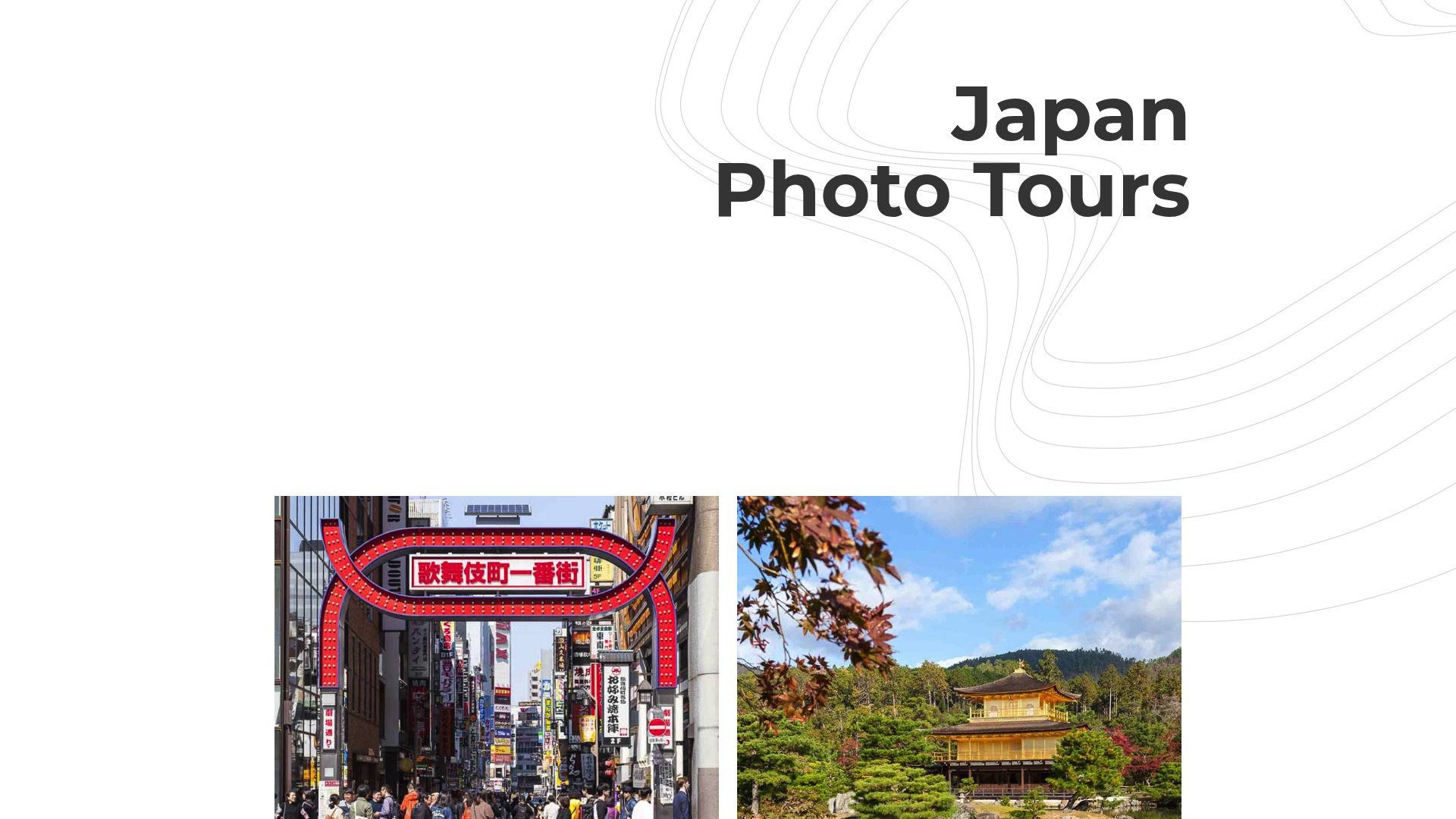
Our Japan photo tours are built specifically for amateur photographers from the United States who want to move beyond snapshots and develop a genuine visual language. You will shoot Kyoto temples at dawn, explore Osaka’s modern architecture at golden hour, and find patterns in places most tourists walk right past. Our guided photography trips to Japan combine on-the-ground instruction with real creative freedom. If you are ready to see how fast you can grow when theory meets practice, enhance your Japan skills with us on your next adventure.
Frequently asked questions
What patterns should I look for in Japanese architecture images?
Focus on repeating pillars, geometric eaves, modular tatami layouts, torii gates, and modern concrete or wood modules for striking compositions. The Kyoto UNESCO Photography Guide specifically highlights curved eaves, pagoda tiers, and stone lanterns as prime repeating elements at temples and shrines.
How do I avoid distortion when photographing architecture patterns?
Use vertical compositions and avoid wide-angle lenses to preserve the balanced proportions Japan’s harmonious architecture was designed to project. Stepping back and using a 50mm or longer focal length keeps lines straight and proportions honest.
Can patterns help my travel photography stand out?
Absolutely. Recognizing and composing patterns adds structure and visual interest that makes your images more memorable than standard wide-angle landmark shots. As Japanese Architecture 101 confirms, patterns enhance your skills in symmetry and light play that are crucial for strong travel photography.
Where are the best places in Japan for photographing architectural patterns?
Temples, shrines, and modern cityscapes in cities like Kyoto and Tokyo offer an abundance of distinctive architectural patterns. Fushimi Inari’s torii gate tunnels, Todai-ji’s post-and-beam columns in Nara, and Tadao Ando’s concrete buildings in Osaka are particularly rich starting points according to the Kyoto UNESCO Photography Guide.
